

Squamous Cell Carcinoma Treatment: Options, Mohs Surgery, and Which Doctors Treat SCC
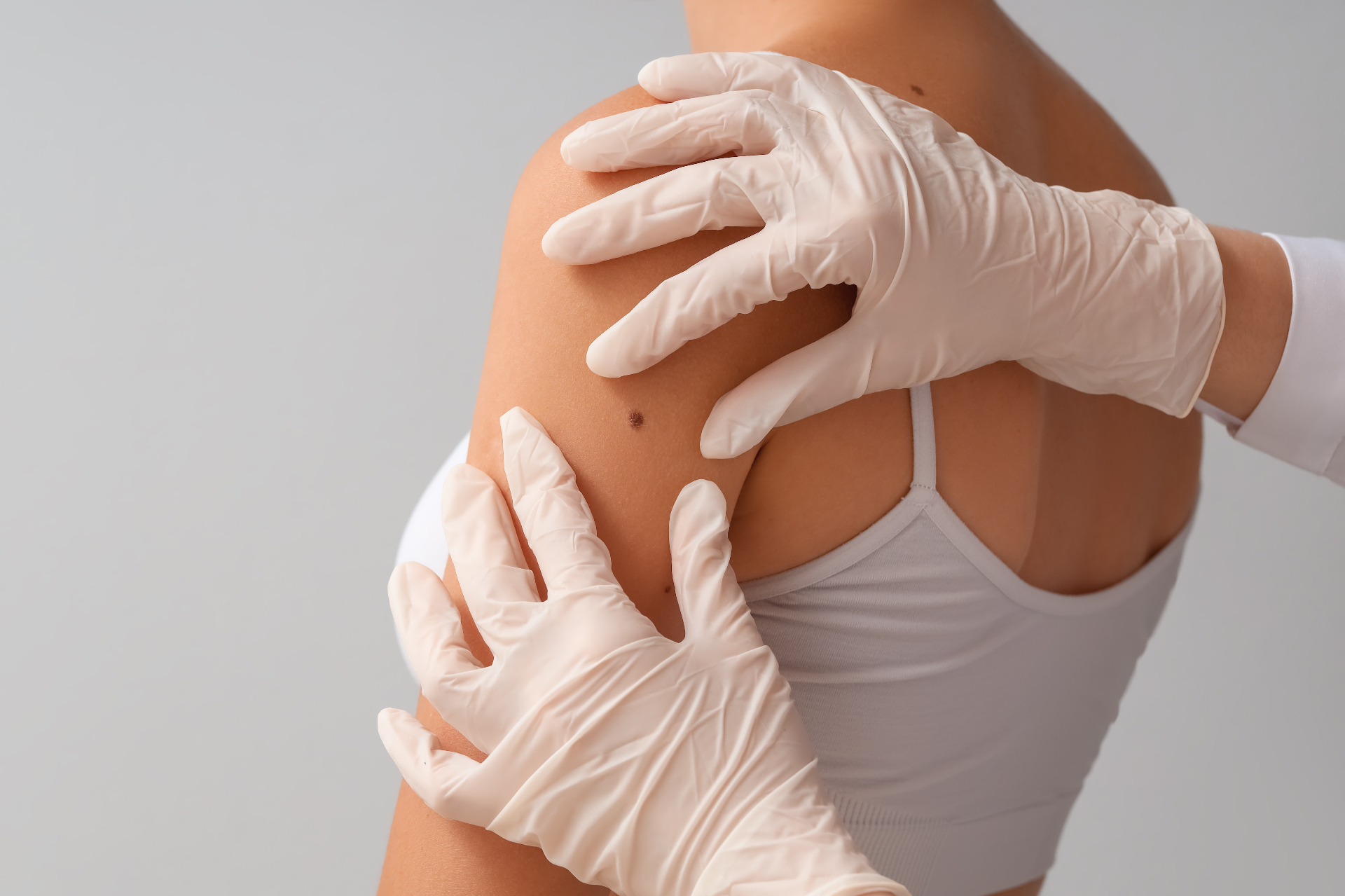
Hearing “squamous cell carcinoma” after a skin biopsy can be unsettling. The good news: squamous cell carcinoma (SCC) is highly treatable when found early. Basal cell and squamous cell carcinoma are the two most common types of skin cancer, according to the National Cancer Institute, and dermatologists treat SCC every day.
This guide explains the main squamous cell carcinoma treatment options, how your doctor chooses one, when Mohs surgery is recommended, and which doctors treat squamous cell skin cancers.
What Is Squamous Cell Carcinoma?
SCC begins in squamous cells, the thin, flat cells in the top layer of the skin. It usually develops on sun-exposed skin such as the face, scalp, ears, lower lip, backs of the hands, and lower legs. According to the American Academy of Dermatology (AAD), SCC may look like a rough, scaly patch, a firm dome-shaped growth, a sore that does not heal (or heals and returns), or a wart-like growth.
SCC can develop from an actinic keratosis, a precancerous spot caused by sun damage. The earliest form, SCC in situ (also called Bowen’s disease or stage 0), is found only in the top layer of skin. Learn more on our squamous cell carcinoma page.
How Doctors Choose the Right SCC Treatment
There is no single “best” treatment for every SCC. Your dermatologist will consider:
- Size and depth of the tumor
- Location, such as the face, ears, or hands versus the trunk or legs
- Whether it is new or has come back after earlier treatment
- Biopsy features, such as how aggressive the cells look or whether the tumor follows nerves
- Your overall health, including a weakened immune system (for example, after an organ transplant)
The AAD’s guidelines of care for cutaneous squamous cell carcinoma sort tumors into lower-risk and higher-risk groups based on factors like these, which helps guide treatment.
Common Squamous Cell Carcinoma Treatment Options
According to the Skin Cancer Foundation and the AAD, most early SCCs can be treated in the office while you are awake, using local numbing medicine.
Surgical Excision
The dermatologist removes the tumor with a small margin of normal-looking skin, and a lab checks that the edges are clear. For small, early SCCs that have not spread, excision is often the only treatment needed.
Mohs Surgery
Mohs surgery removes the cancer one thin layer at a time. Each layer is checked under a microscope during your visit, and more tissue is removed only where cancer remains, sparing healthy skin. The Skin Cancer Foundation reports cure rates of up to 97 percent for SCCs treated with Mohs for the first time. Learn more about Mohs surgery at Suncoast Skin Solutions.
Electrodesiccation and Curettage (ED&C)
The doctor scrapes away the tumor with a curette, then uses heat to destroy remaining cancer cells. The AAD notes this can work well for small, shallow, first-time SCCs with a low risk of returning, typically on the trunk, arms, or legs.
Cryosurgery (Freezing)
Liquid nitrogen freezes and destroys the tumor. The AAD reserves cryosurgery for small, earliest-stage, low-risk SCCs, generally when options like excision are not a good fit.
Topical Treatments and PDT
Prescription creams (5-fluorouracil or imiquimod) and photodynamic therapy are sometimes used for very superficial SCC or SCC in situ, but are not recommended for invasive SCC.
Treatment for Advanced SCC
Rarely, SCC grows deeply or spreads to lymph nodes. Dermatologists then work with other cancer specialists, and treatment may combine surgery and immunotherapy. The NCI lists cemiplimab and pembrolizumab for SCC that is locally advanced or has spread, and in October 2025 the FDA approved cemiplimab for certain high-risk SCCs after surgery and radiation, according to the AAD.
When Is Mohs Surgery Recommended for Squamous Cell Carcinoma?
The AAD says Mohs surgery is especially helpful for SCC that:
- Develops on an ear, eyelid, scalp, or hand, or near an eye or ear
- Has a border that is hard to see
- Has come back after treatment
- Appears to grow along a nerve or blood vessel
- Has a higher risk of returning or spreading
- Appears on skin previously treated with radiation
Organ transplant recipients and people who are immunosuppressed are at higher risk for aggressive SCC.
According to the American College of Mohs Surgery, Mohs is an outpatient procedure under local anesthesia, and the wound is often repaired the same day. Our guides on what to expect before Mohs surgery and Mohs surgery recovery can help you prepare.
Which Doctors Treat Squamous Cell Skin Cancers?
For SCC that has not spread beyond the skin, the AAD explains that a dermatologist or Mohs surgeon will most likely treat you, and most patients are treated successfully. Mohs surgery is often performed by a board-certified dermatologist with specialized Mohs training; the American College of Mohs Surgery notes that fellowship training adds at least one year of training in Mohs surgery, skin cancer pathology, and reconstruction. If SCC has spread or is likely to, your dermatologist may coordinate care with radiation, surgical, or medical oncologists.
Mohs Surgery for SCC at Suncoast Skin Solutions
Suncoast Skin Solutions has more than 40 Florida locations offering skin cancer care, Mohs surgery, and medical, pediatric, and cosmetic dermatology. Many of our Mohs surgeons are members of the American College of Mohs Surgery or the American Society for Mohs Surgery. Our Mohs surgeons, including Dr. Ewanowski, Dr. Bezalel, Dr. Styperek, Dr. Lutz and others, have individually performed 10,000, 20,000 and even 30,000 Mohs cases over decades of practice. Mohs surgery is available at offices including:
- Brandon (Mohs suite, 500 Vonderburg Dr, Suite 202E): Dr. Spencer Bezalel, Dr. Nicholas Castner, and Dr. Christopher Ewanowski
- Lutz (4651 Van Dyke Road, serving Tampa-area patients): Dr. Christopher Ewanowski
- Largo (Bardmoor) (8787 Bryan Dairy Rd, Suite 360): Dr. Nicholas Castner, Dr. Sultan Mirza, Dr. Whitney DeLozier, and Dr. Brandon Basehore
- Largo (Seminole Blvd) (11200 Seminole Blvd, Suite 205): Dr. Christopher Ewanowski
- St. Petersburg (5200 Seminole Blvd): Dr. Nicholas Castner and Dr. Spencer Bezalel
- Clearwater / Countryside (2467 Enterprise Rd, Suite A & B): Dr. Spencer Bezalel
- Palm Harbor (32615 U.S. Hwy 19 N, Suite 1): Dr. Sultan Mirza
- Brooksville (14095 Cortez Blvd): Dr. Sultan Mirza
- Lecanto (525 N Dacie Point): Dr. Brett Blake, Dr. Spencer Bezalel, Dr. Ralph E. Massullo Jr., and Dr. William A. Welton III
- Ocala (2611 SE 17th Street, Suite B): Dr. Brett Blake
- Leesburg (27950 US-27): Dr. Colleen MacInnis
- Mt. Dora (17521 US-441): Dr. Colleen MacInnis and Dr. George vonHilsheimer
- The Villages (1950 Laurel Manor Drive, Suite 124): Dr. George vonHilsheimer and Dr. Colleen MacInnis
- Punta Gorda (25097 Olympia Ave, Suite 202): Dr. Ilya Lim
- Sebring (5825 US Highway 27 N): Dr. Rebecca Tung and Dr. Andrew Styperek
- Winter Haven (429 2nd Street NW): Dr. Andrew Styperek
- Daytona Beach (655 N. Clyde Morris Blvd, Suite B): Dr. Andrew Styperek
- St. Augustine (1100 S Ponce De Leon Blvd, #3B): Dr. Christopher Dolan and Dr. Andrew Styperek
- Jacksonville Mohs (4465 Baymeadows Rd, Suite 5): Dr. Michael Lutz and Dr. Christopher Dolan
- Jacksonville (7711 Baymeadows Road East, Suite 6): Dr. Christopher Dolan and Dr. Andrew Styperek
- Jacksonville Beach (3200 S. 3rd Street, Suite 200): Dr. Michael Lutz and Dr. Christopher Dolan
- Jupiter (4601 Military Trail, Suite 203): Dr. Jeremy Freedman
Not every SCC needs Mohs surgery; your dermatologist will recommend the option that fits your diagnosis. Find an office on our locations page.
After Treatment: Follow-Up and Prevention
Having one skin cancer raises your risk of another. The NCI notes that when basal and squamous cell carcinomas return, it is usually within five years of treatment. To protect your skin:
- Keep follow-up skin exams as your dermatologist recommends
- Do a monthly skin self-exam, including around any surgical scar
- Use broad-spectrum sunscreen, protective clothing, and shade, and avoid tanning beds
- Report any new or changing spot, or a sore that will not heal
If a spot concerns you, a dermatologist can examine it and perform a biopsy if needed. Learn more about skin cancer testing and diagnosis.
Frequently Asked Questions About Squamous Cell Carcinoma Treatment
Most squamous cell carcinomas that are confined to the skin are treated by a dermatologist or a Mohs surgeon, who is typically a dermatologist with specialized training in Mohs surgery. If SCC has spread or is likely to spread, your dermatologist may coordinate care with a radiation oncologist, surgical oncologist, or medical oncologist.
Sometimes. Cryosurgery with liquid nitrogen may be used for very small, earliest-stage SCC with a low risk of returning, usually when excision is not a good option. Invasive or higher-risk SCC is generally treated with surgical excision or Mohs surgery.
Mohs surgery has a very high cure rate, up to 97 percent for first-time SCCs according to the Skin Cancer Foundation, and it spares healthy tissue. It is often recommended for SCC on the face, ears, scalp, or hands and for recurrent or higher-risk tumors. Many small, low-risk SCCs on the trunk, arms, or legs can be treated effectively with excision or ED&C.
When it is found and treated early, SCC is highly treatable. Left untreated, it can grow deeper and, in some cases, spread to lymph nodes or other organs, which is why dermatologists recommend treatment soon after diagnosis.
Sources
- American Academy of Dermatology. Squamous cell carcinoma: From symptoms to treatments (updated Jan 13, 2026). https://www.aad.org/public/diseases/skin-cancer/squamous-cell-carcinoma
- Skin Cancer Foundation. Squamous Cell Carcinoma Treatment (updated April 2026). https://www.skincancer.org/skin-cancer-information/squamous-cell-carcinoma/scc-treatment-options/
- National Cancer Institute. Skin Cancer Treatment (PDQ®)–Patient Version (updated May 1, 2025). https://www.cancer.gov/types/skin/patient/skin-treatment-pdq
- American College of Mohs Surgery. Mohs Surgery FAQs. https://www.mohscollege.org/for-patients/about-mohs-surgery/mohs-surgery-faqs
- American College of Mohs Surgery. For Patients: What Is Mohs Surgery? https://www.mohscollege.org/for-patients
- Work Group; Invited Reviewers; Kim JYS, Kozlow JH, et al. Guidelines of care for the management of cutaneous squamous cell carcinoma. J Am Acad Dermatol. 2018;78(3):560-578. PMID 29331386. https://pubmed.ncbi.nlm.nih.gov/29331386/
This article is for general education and is not a substitute for medical advice. Talk with your dermatologist about the treatment that is right for you.