

Skin Cancer Testing and Diagnosis
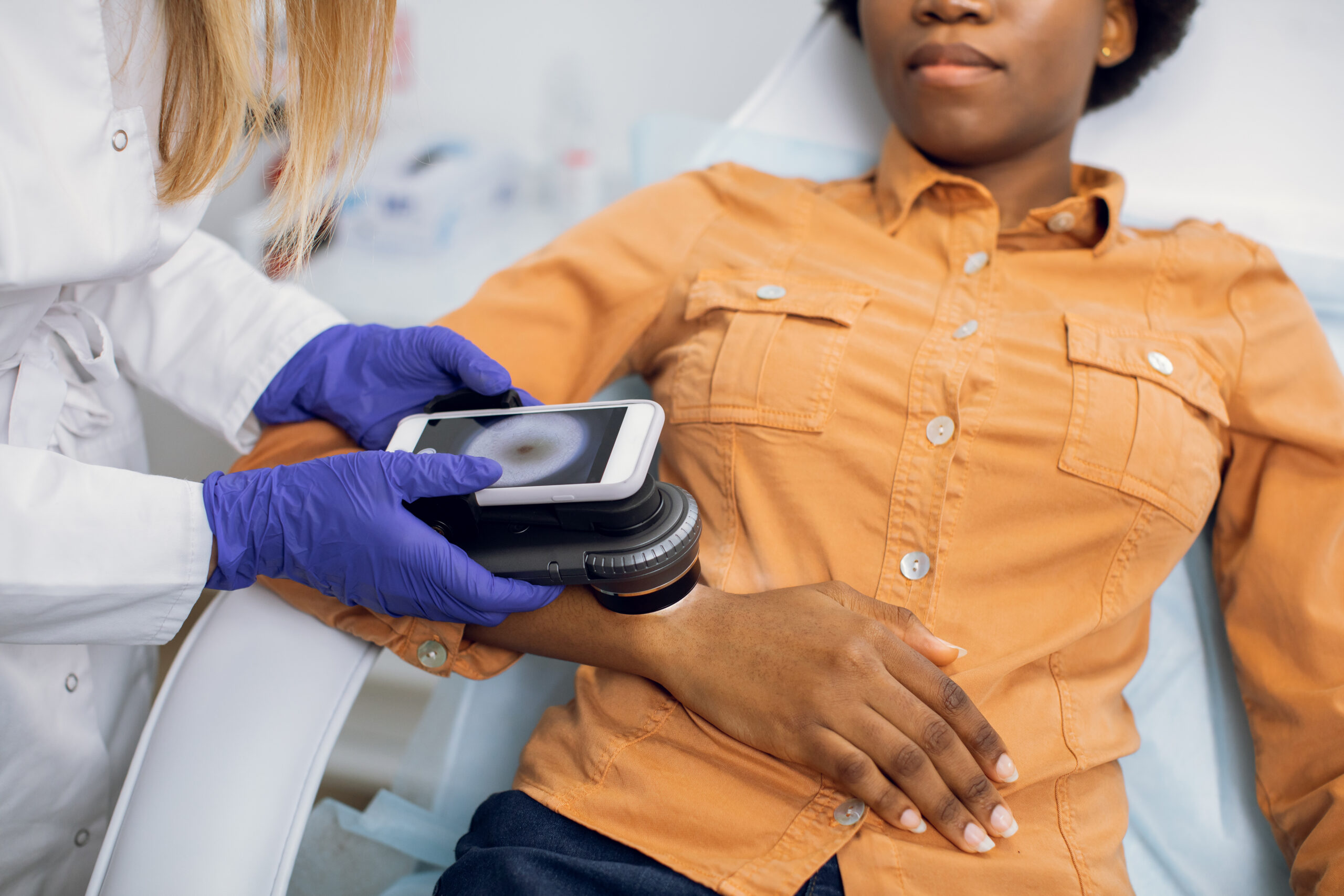

Skin cancer testing is one of the most important steps in protecting your long-term health. When caught early, skin cancer (including melanoma) is highly treatable. Dermatologists use several diagnostic methods for melanoma testing and skin cancer detection before they advise on the most appropriate course of treatment.
If a patient presents with an abnormal skin area, the dermatologist will assess it and perform tests to determine whether it is melanoma, another type of skin cancer, or a benign condition. If the diagnosis indicates melanoma, the doctor may order further testing to determine whether it has spread to other parts of the body.
Suncoast Skin Solutions is a leading dermatology practice headed by board-certified dermatologist Dr. Christopher Ewanowski and a team of skilled providers. At Suncoast, we provide skin cancer testing to patients in Tampa, Brandon, Lutz, Seminole, Riverview, Brooksville, Winter Haven, Daytona Beach, Largo, St. Petersburg, Ocala, The Villages, Central Florida, and surrounding locations in this majestic part of the country.
Dermatologist Skin Exam for Skin Cancer
A dermatologist-led skin exam is the first step. During the physical exam, the dermatologist will carefully assess the shape, size, texture, and color of any suspected area. They will check whether the skin is crusting, bleeding, or oozing, and examine the patient’s body more broadly for moles, lesions, or spots that could indicate skin cancer.
The doctor may also feel the lymph nodes in the armpits, groin, or along the neck. These small, bean-sized clusters of immune cells are often the first place melanoma spreads, which can cause them to enlarge or become more prominent.
Dermatoscopy for Skin Cancer Testing
Some dermatologists use a technique known as dermatoscopy alongside a physical exam to evaluate the skin more closely. Using a dermatoscope (a specialized magnifying lens with a built-in light source), the provider can examine skin structures not visible to the naked eye.
Digital imaging may also be used to capture and monitor changes to suspicious lesions over time. Dermatoscopy improves the accuracy of detecting suspicious lesions earlier, and can often help reassure patients that a spot is most likely benign and does not require a biopsy. When performed by an experienced dermatologist, it is a valuable tool in early skin cancer detection.
Skin Cancer Biopsy Procedures
If a dermatologist suspects that a skin spot may be melanoma or another form of skin cancer, they may perform a biopsy. During a biopsy, tissue is removed from the suspicious area and sent to a laboratory for microscopic analysis.
Before any skin cancer biopsy procedure, your doctor will inject a local anesthetic into the target area using a fine needle. Patients may feel a brief prick and mild stinging as the medication is administered. After that, there should be no pain during the procedure itself.
Following that, the dermatologist will select a biopsy technique based on the location, size, and characteristics of the suspicious area. Patients should be aware that any type of biopsy may leave a small scar, and it is worth discussing this with their provider beforehand.
Types of Skin Biopsies
The goal of any biopsy is to remove an adequate amount of tissue so the dermatologist can make a complete and accurate diagnosis. To do this, your dermatologist will use one of the following three biopsy procedures.
- Shave biopsy: A thin layer of skin is shaved off using a small blade. This method is commonly used for raised lesions, and the wound usually heals without stitches.
- Punch biopsy: A circular tool removes a small, cylindrical sample of skin, including deeper layers, and the site is usually closed with stitches.
- Excisional biopsy: During an excisional biopsy, the entire suspicious lesion is surgically removed along with a margin of surrounding tissue. This is most often used when your doctor suspects melanoma.
Newer Diagnostic Testing Methods
Advances in dermatology have introduced non‑invasive approaches to skin cancer testing. The Pigmented Lesion Assay (PLA) is one example; during this test, a provider can assess melanoma risk using a non‑invasive adhesive patch to collect skin cells, rather than a traditional skin biopsy. These newer tools complement existing diagnostic methods and may help identify patients at higher risk for melanoma earlier in the process, while also supporting decisions about which lesions truly need a biopsy.
When to Get a Skin Cancer Screening
Visit a doctor or dermatologist for a skin cancer screening if you notice any of the following:
- A new mole or growth that appears suddenly
- An existing mole that is changing in size, shape, or color
- A lesion that bleeds, crusts, or does not heal
- A personal or family history of skin cancer or melanoma
- Significant or prolonged sun exposure over time
- Fair skin, a large number of moles, or a history of sunburns
When in doubt, it is always better to have a suspicious spot evaluated than not. Dermatologists at Suncoast Skin Solutions are knowledgeable about risk factors and identifying early warning signs, and can help determine whether you need further skin cancer testing.
The Importance of Early Skin Cancer Detection
Early skin cancer detection significantly improves treatment outcomes. When identified before it has spread, skin cancer is far more manageable and often curable. Regular dermatologist visits help catch suspicious changes at their earliest, most treatable stage.
In addition to professional skin exams, we encourage everyone to perform routine self-checks at home, paying close attention to any new or changing spots and reporting them to a dermatologist as soon as possible.
- Check your entire body, including areas not exposed to the sun, such as the scalp, between toes, and under fingernails
- Use the ABCDE rule as you evaluate moles
- Use a mirror or ask a partner to help examine hard-to-see areas like your back and scalp
Frequently Asked Questions About Skin Cancer Testing
How do dermatologists test for skin cancer?
Dermatologists will begin with a visual skin exam to evaluate moles, lesions, and any suspicious areas. They may use dermatoscopy for a closer look. If a spot appears concerning, they may perform a biopsy to reach a melanoma diagnosis or rule it out entirely.
Does a skin cancer test hurt?
A standard skin exam is painless. If you need a biopsy, your doctor will apply a local anesthetic. Expect some mild soreness or tenderness afterward.
How long does it take to get biopsy results?
Biopsy results can take one to two weeks, depending on the laboratory. Your dermatologist will contact you to discuss the findings and any next steps.
What happens if skin cancer is found?
If they detect skin cancer, your dermatologist will discuss treatment options with you. These may include surgical removal, topical treatments, or referral to a specialist, depending on the type and stage of the cancer.
When should I schedule a skin cancer examination?
Anyone who notices a new, changing, or unusual spot on their skin should schedule an evaluation. Annual skin exams are generally recommended, especially for those with a history of sun exposure, prior skin cancer, or a family history of melanoma.