

Signs of Skin Cancer: Early Detection, Warning Signs, and Symptoms
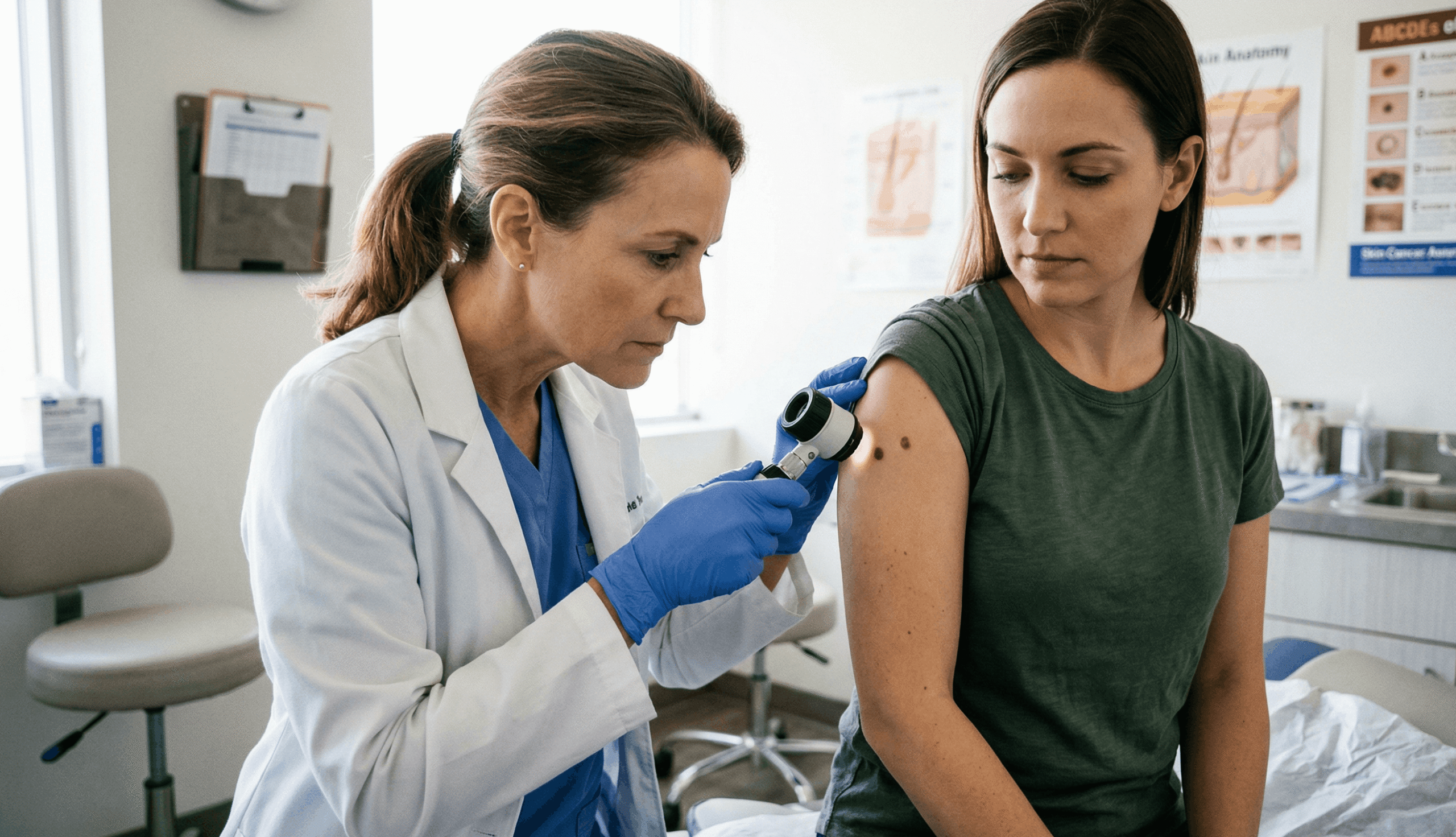
Worried about a mole or spot that’s changed, grown, or won’t heal?
Our board-certified dermatologists provide thorough skin cancer screenings at 40+ locations across Florida, with same-day appointments available.
Early signs of skin cancer can be easy to overlook if you don’t know what to look for
That’s why early skin cancer detection, including awareness of the ABCDE criteria for melanoma and the identification of new or changing moles, can mean the difference between early-stage treatment and a far more serious diagnosis. At Suncoast Skin Solutions, board-certified dermatologists emphasize the importance of spotting these early signs of skin cancer and are doing their part to educate about skin cancer symptoms and how they present.
Read on for an overview of the basics of what skin cancer looks like, including advice on when to see a dermatologist for skin cancer concerns.
What Are the Early Skin Cancer Signs to Watch For?
Unlike many internal cancers, early skin cancer signs are often visible, especially in areas regularly exposed to the sun. And recognizing these signs early can lead to simpler treatments and better outcomes.
The three main types of skin cancer, basal cell carcinoma, squamous cell carcinoma, and melanoma, each have distinct appearances:
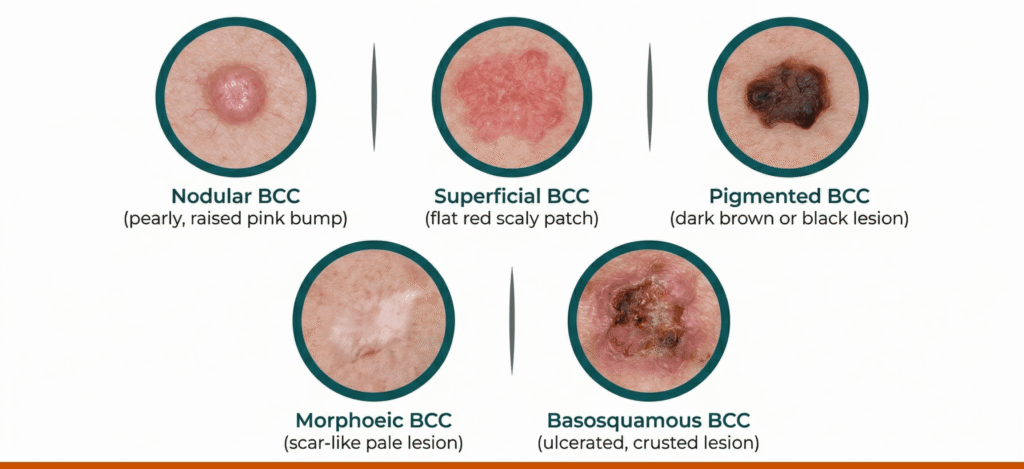
- Basal cell carcinoma often manifests as a pearly bump or a nonhealing sore.
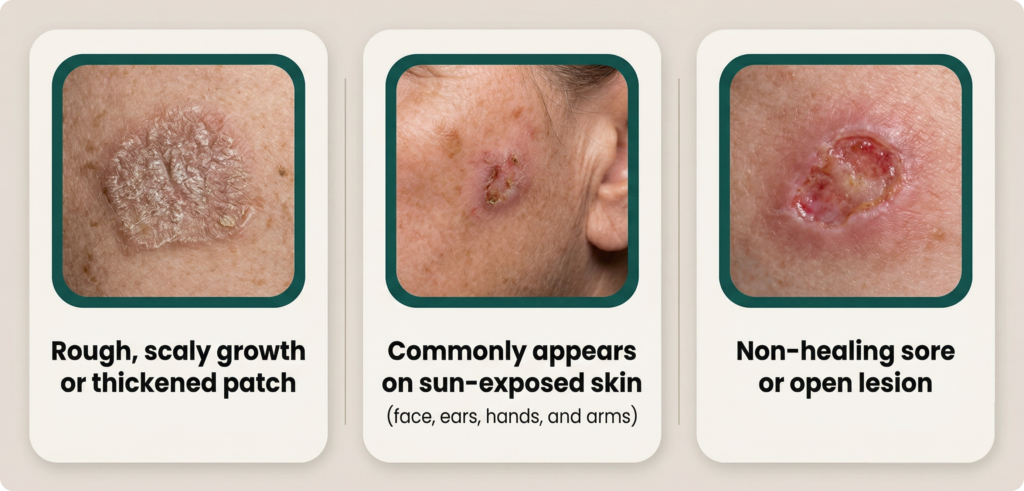
- Squamous cell carcinoma may present as a scaly patch or a firm red nodule.
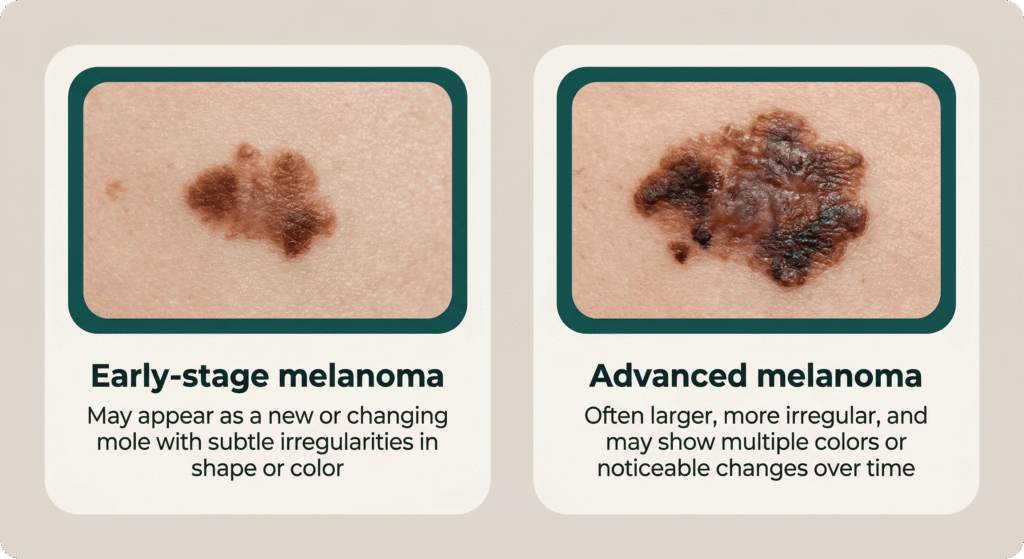
- Melanoma, the most dangerous form, can appear as a new spot or a change in an existing mole.
Suncoast Skin Solutions offers comprehensive screenings to help detect early warning signs of skin cancer, providing peace of mind and professional advice so you don’t have to monitor your skin alone.
Common Skin Cancer Symptoms
Different types of skin cancer have unique symptoms. Basal cell carcinoma symptoms might include a translucent bump, often with visible blood vessels. Squamous cell carcinoma can appear as a rough, scaly patch or a sore that doesn’t heal. Melanoma symptoms are more varied, often involving changes in a mole’s size, shape, or color.
These skin cancer symptoms can be subtle, making regular self-examinations and professional check-ups vital. By understanding these symptoms, you can better identify potential issues and seek timely medical advice, including getting checked out for any signs of skin cancer as early as possible.
The ABCDE Rule for Melanoma Detection
The ABCDE rule is a valuable tool for melanoma detection, used by dermatologists worldwide. Here’s how it works:
- A for Asymmetry: If you draw a line through a mole, the two halves should match. If they don’t, it’s a warning sign.
- B for Border: Look for edges that are notched, ragged, or blurred.
- C for Color: Multiple colors in a single spot, such as brown, black, red, white, or blue, can be concerning.
- D for Diameter: While melanomas are often larger than 6mm, size alone isn’t the only indicator.
- E for Evolving: Any change in a mole’s size, shape, or color, or symptoms such as itching or bleeding, should be checked.
What Skin Cancer Looks Like
Basal cell carcinoma
Squamous cell carcinoma
Melanoma
When to See a Dermatologist for Skin Cancer Concerns
Knowing when to see a dermatologist for skin cancer concerns is essential for maintaining your health. If you notice a sore that doesn’t heal within four weeks, a spot that bleeds or repeatedly crusts over, or any mole that changes in appearance, it’s time to consult a professional.
Monthly self-exams and annual professional screenings are key components of a proactive health strategy. Suncoast Skin Solutions believes that comprehensive examinations are crucial for early detection and prevention, helping you stay ahead of the signs of skin cancer and any potential causes for concern.
How to Perform Regular Self-Exams
The signs of skin cancer aren’t always obvious. Performing regular self-exams is an effective way to monitor your skin’s health, and can help ensure you get skin cancer symptoms treated promptly.
Start with a head-to-toe approach, using good lighting and a full-length mirror. A hand mirror can help with hard-to-see areas. Document any new or changing spots, using a body map or smartphone app to track changes. This routine complements professional screenings and is a crucial step in identifying early signs of skin cancer. Suncoast Skin Solutions emphasizes patient education, offering resources and support to help you perform these self-exams effectively.
Frequently Asked Questions About Skin Cancer Signs
How do you detect skin cancer early?
Early detection involves monthly self-exams using the ABCDE rule and annual professional screenings. Look for new growths, changes in existing moles, sores that won’t heal, and any spot that looks different from others on your body. Document suspicious areas with photos and see a dermatologist promptly for anything concerning.
What are the 7 warning signs of skin cancer?
The seven key warning signs include: asymmetrical moles or spots, irregular or blurred borders, multiple colors within one lesion, moles larger than 6mm, any evolving or changing spots, sores that don’t heal within 4 weeks, and spots that itch, bleed, or crust repeatedly.
What does skin cancer look like at the beginning?
Early skin cancer often appears subtle—a small pearly bump, a rough scaly patch, a mole that’s slightly changed, or a sore that heals and returns. Basal cell carcinomas might look like translucent bumps, squamous cell carcinomas like persistent rough patches, and melanomas like new dark spots or changes in existing moles. Some early cancers are pink or flesh-colored rather than dark.
Do all skin cancers need immediate treatment?
While most skin cancers benefit from prompt treatment, urgency varies by type. Melanomas require immediate attention due to their potential to spread quickly. Basal cell carcinomas grow slowly but still need treatment to prevent local damage. Your dermatologist will assess the type, location, and growth rate to determine the appropriate timeline for treatment.
Can skin cancer appear in areas not exposed to the sun?
Yes, skin cancer can develop anywhere on your body, including areas that are rarely or never exposed to the sun, such as the soles of your feet, palms, under your fingernails, the genital area, and inside your mouth. Melanoma, in particular, can appear in unexpected locations, which is why comprehensive full-body skin examinations are important regardless of sun exposure patterns.
Why Choose Suncoast Skin Solutions for Skin Cancer Care?
Suncoast Skin Solutions provides expert medical, surgical, and cosmetic dermatology care at locations across Florida. Our board-certified dermatologists specialize in early detection and treatment of skin cancer, offering comprehensive skin exams and personalized care plans tailored to each patient.
With convenient access to care and a strong focus on patient outcomes, our team is committed to helping you identify concerns early and confidently take the right next steps.
Schedule a skin exam today to have any new, changing, or concerning spots evaluated by a trusted dermatology provider.