

Red Light Therapy Masks: What Studies Show About Skin Appearance
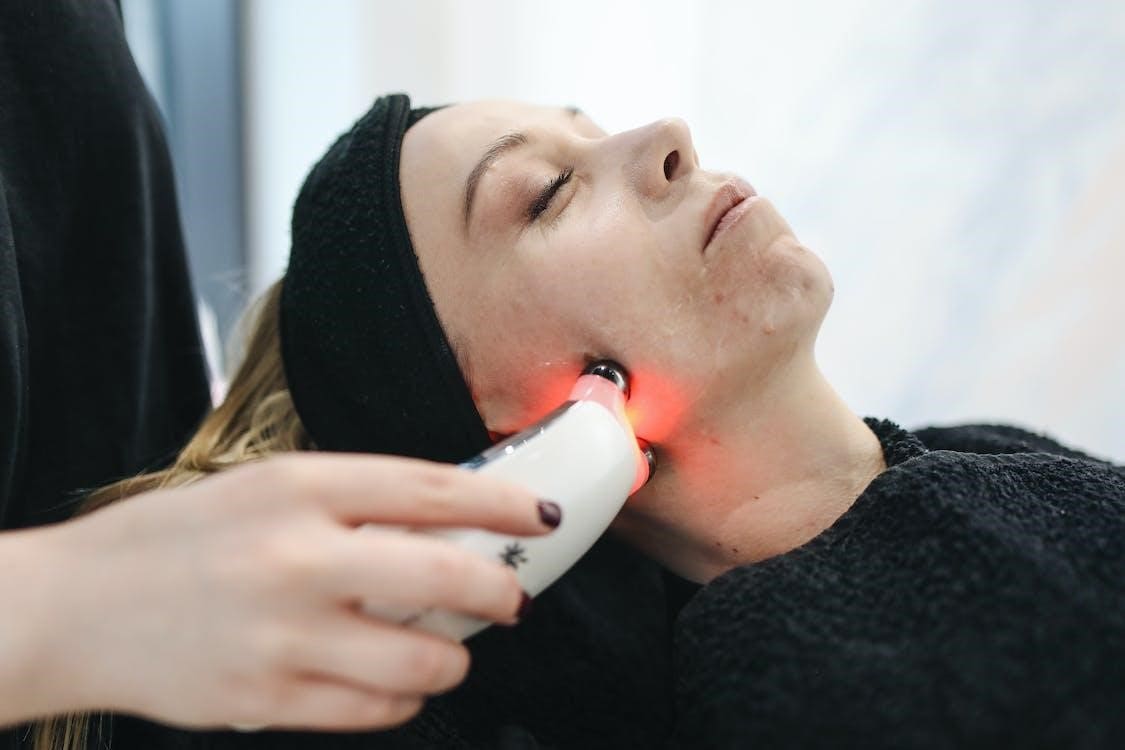
At Suncoast Skin Solutions, we follow the research closely so we can offer patients practical options supported by clinical evidence. One approach that has generated substantial academic interest is at-home red light therapy masks for visible skin improvement. Here’s what the studies show.
How Red Light Therapy May Improve Skin Appearance
Red and near-infrared LED light (photobiomodulation) is thought to support mitochondrial activity, increase ATP production, and encourage collagen and elastin synthesis without heat or downtime. Several clinical studies have examined LED phototherapy, including at-home LED masks.
These treatments are intended for cosmetic improvement, such as the appearance of fine lines, firmness, and texture. They are not a medical treatment for skin cancer. If you are also looking at options for reducing the risk of new basal or squamous cell carcinomas, we have a separate article on nicotinamide and skin cancer risk.
A Clinical LED Phototherapy Study
One well-known randomized, double-blind, split-face trial of LED phototherapy in a clinical setting (Lee et al., Journal of Photochemistry and Photobiology B, 2007) treated 76 adults with facial wrinkles using 633 nm red light, 830 nm near-infrared light, or both, twice weekly for four weeks versus a sham control. Sessions lasted 20 minutes. Researchers followed participants for three months after treatment.
The treated sides showed significant reductions in wrinkle severity (up to 36%) and increases in skin elasticity (up to 19%). Skin biopsies demonstrated increased collagen and elastic fibers along with activated fibroblasts. No adverse effects were reported.
It is important to note that this study used LED devices in a clinic, not an at-home mask. It is still one of the most frequently cited trials on red and near-infrared LED light for visible rejuvenation, and it helps explain why properly powered devices have attracted interest.
A Home-Use Red LED Mask Study
A more recent clinical evaluation of a home-use red LED mask (Couturaud et al., Skin Research and Technology, 2023) followed 20 adults (15 women and five men), ages 45 to 70, using a 630 nm mask for 12 minutes, twice weekly, over three months.
Progressive improvements were measured in crow’s feet wrinkle depth, dermal density, skin firmness, cheek roughness, and pore size. Dermal density increased by approximately 26% after one month (26.4% at 28 days), with further gains over three months (41% at 56 days and 47.7% at 84 days). After the first month, the study also reported a 15.6% decrease in crow’s feet wrinkle depth, a firming effect, a 6.8% decrease in cheek roughness, and a 28.5% decrease in pore diameter. Participants also reported overall better skin quality, with benefits still evident one month after stopping treatment. The regimen was well tolerated.
These findings support the use of properly powered red-light masks as a non-invasive option for improving the appearance of fine lines, firmness, and skin texture. Results vary by device parameters, consistency of use, and individual skin.
Practical Takeaways
Consistent sun protection remains the foundation of skin appearance. Red-light masks can be a useful adjunct for visible rejuvenation when used regularly as directed. They are one of several non-invasive options patients may discuss as part of a broader cosmetic dermatology plan. In-office treatments such as an anti-aging facial, microneedling, or skin tightening may also be appropriate depending on your goals.
Results from any approach are individual. Always consult your Suncoast Skin Solutions provider before starting a new device, especially if you have a history of skin cancer, take other medications, or have other medical conditions. We are happy to review whether these options fit your skin goals and medical history.
Schedule a visit at one of our 40+ Florida locations to discuss personalized recommendations.
Frequently Asked Questions
Do red light therapy masks treat or prevent skin cancer?
No. The studies summarized here looked at visible skin improvement, such as fine lines, firmness, and texture. Red-light masks are primarily cosmetic and are not a medical treatment for skin cancer.
Were these studies done with at-home masks?
Not entirely. The 2007 Lee trial used LED phototherapy in a clinical setting. The 2023 Couturaud evaluation used a home-use red LED mask for 12 minutes, twice weekly, over three months. Device type, wavelength, and treatment time all matter, so results from one study may not apply to every mask.
How often were the devices used in the studies?
In the Lee trial, adults were treated twice weekly for four weeks, with 20-minute sessions. In the Couturaud home-use study, volunteers used a 630 nm mask for 12 minutes, twice weekly, for three months. Follow the directions for your specific device and ask your dermatologist what’s reasonable for you.
Should I talk with a dermatologist before using a red light mask?
Yes. Results vary, and a Suncoast Skin Solutions provider can help you decide whether a mask, another cosmetic treatment, or a combination makes sense for your skin.
References
- Lee SY, Park KH, Choi JW, et al. A prospective, randomized, placebo-controlled, double-blinded, and split-face clinical study on LED phototherapy for skin rejuvenation. J Photochem Photobiol B. 2007;88(1):51-67. PMID 17566756. https://pubmed.ncbi.nlm.nih.gov/17566756/
- Couturaud V, Le Fur M, Pelletier M, Granotier F. Reverse skin aging signs by red light photobiomodulation. Skin Res Technol. 2023;29(7):e13391. PMID 37522497. https://pubmed.ncbi.nlm.nih.gov/37522497/