

How to Identify Scabies: Symptoms, Rash, and Treatment
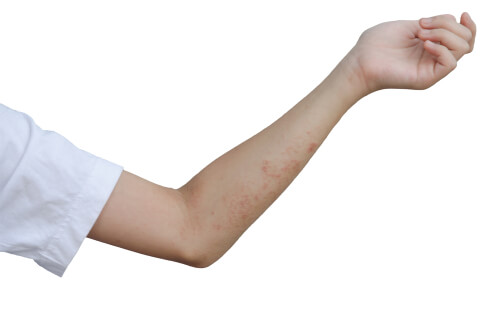
If you’re wondering how to identify scabies, start with the two most common signs: intense itching that gets worse at night and a pimple-like rash. The rash often appears between the fingers, on the wrists, or around the waist. Scabies can look like several other itchy skin conditions, so an exam is the most reliable way to know for sure.
Symptoms of Scabies
Scabies is a skin infestation caused by microscopic mites that burrow into the upper layer of the skin. The itching and rash come from your body’s allergic reaction to the mites, their eggs, and their waste. These signs suggest scabies:
- Itching that’s worse at night: The itch is often intense enough to disrupt sleep, and it can also flare after a hot bath or shower.
- A pimple-like rash: Small red bumps often appear in clusters or short lines.
- Burrows: Thin, wavy lines may appear on the skin where mites have tunneled.
- Itching in more than one person: When people you live with or are close to start itching too, scabies becomes more likely.
When Do Scabies Symptoms Start?
The first time you get scabies, symptoms usually take four to eight weeks to appear. If you’ve had scabies before, your body recognizes the mites faster, and itching can start within one to four days.
The rash often begins as a few small bumps. With continued scratching, it can spread into larger patches of irritated, broken skin.
What Does a Scabies Rash Look Like?
A scabies rash looks like small red bumps or pimples, and it’s easy to mistake for bug bites, hives, or acne. Scratching can leave sores, scabs, and scaly patches on top of the rash. If those sores become infected, you may notice spreading redness, warmth, swelling, pus, or a fever, and you should see a doctor promptly.
Scabies in Adults: Where the Rash Appears
In adults and older children, the rash usually shows up in warm areas and skin folds, including:
- Between the fingers and on the wrists
- Elbows and armpits
- The waist and belly button
- Buttocks and shoulder blades
- Around the nipples and on the genitals
Scabies in Infants and Young Children
Babies and young children can have a scabies rash in places that adults usually don’t, including the head, face, neck, palms, and soles of the feet. Our pediatric dermatology providers can check a baby’s rash and recommend treatment that’s safe for their age.
How to Spot Scabies Burrows
Scabies burrows are tiny, raised, crooked lines on the skin. They may be skin-colored or grayish-white. Check the webs between your fingers and your wrists first, since burrows are most often found there.
A person with typical scabies usually has only 10 to 15 mites, so you may not find a burrow at all. That doesn’t rule out scabies.
Scabies vs. Eczema: How Can You Tell the Difference?
Scabies and eczema can both cause an itchy, red rash, but a few differences can help you tell them apart:
| Scabies | Eczema | |
| Cause | Mites living in the skin | Skin inflammation, often with dry skin and certain triggers |
| Itching | Intense, especially at night | Comes and goes, often worse with heat, sweat, or dry skin |
| Onset | Can start suddenly, weeks after contact | Often long-term, with repeated flare-ups |
| Other people | Often affects several people in the same household | Doesn’t spread to others |
| Look | Small bumps, sometimes with burrows | Dry, rough, or flaky patches |
If you’re not sure which one you have, a dermatologist can tell them apart during an exam.
Is Scabies Contagious?
Yes. Scabies spreads mainly through prolonged skin-to-skin contact, which is why it often passes between family members, sexual partners, and caregivers. A person can spread scabies during the weeks before their own symptoms appear.
Crusted Scabies
Crusted scabies, also called Norwegian scabies, is a severe form that causes thick, crusted skin. It mainly affects older adults and people with weakened immune systems. Because the skin can contain very large numbers of mites, crusted scabies spreads far more easily, even through brief contact. It can cause outbreaks in nursing homes and other care facilities.
People with crusted scabies may itch less than you’d expect, so the crusting itself is often the main sign.
How Does a Dermatologist Diagnose Scabies?
A dermatologist diagnoses scabies by examining your skin, noting where the rash appears, and checking for burrows.
To confirm the diagnosis, your dermatologist may take a skin scraping. This involves gently scraping a small area of skin, often over a burrow. The sample is then checked under a microscope for mites, eggs, or mite waste.
How to Treat Scabies
Prescription medications called scabicides, such as permethrin cream, kill scabies mites. Household members and close contacts usually need scabies treatment at the same time, even if they don’t have symptoms. Over-the-counter anti-itch creams can ease discomfort, but they don’t kill the mites.
Frequently Asked Questions
Scabies mites are too small to see clearly with the naked eye. An adult female measures only about a third of a millimeter.
Scabies needs prescription treatment. The mites keep laying eggs in the skin, so the infestation continues until the mites are killed.
Primary care providers and dermatologists can both diagnose and treat scabies. A dermatologist is especially helpful when the rash is hard to identify or when symptoms are severe. At Suncoast, scabies diagnosis and treatment are part of our medical dermatology care.
It’s possible but uncommon with typical scabies. Scabies mites generally can’t survive more than two to three days away from human skin. Crusted scabies is the exception, since the large number of mites makes it easier to spread through bedding, clothing, and furniture.
Itching often continues for two to four weeks after treatment, even after the mites are gone. If itching lasts longer than that, or new burrows or bumps appear, contact your dermatologist, since you may need another round of treatment.
If you have an itchy rash you can’t explain, our board-certified dermatologists can confirm whether scabies is the cause. Schedule an appointment or call 844-SUNDERM (844-786-3376). Same-day appointments are available at many of our Florida offices.