

How to Get Rid of Acne Scars
by Suncoast Skin Solutions team
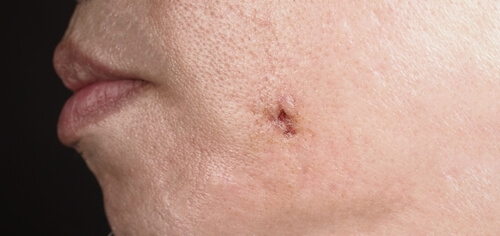
If you’re wondering how to get rid of acne scars, start by figuring out what kind you have. Flat red or brown marks usually fade on their own with time, sun protection, and the right skincare. Textured scars, meaning pits, dents, and raised bumps, rarely go away without help. In-office treatments can make them far less noticeable, and a dermatologist can match the treatment to the scar.
Our board-certified dermatologists see acne scarring at every stage, and below, we’ll explain how to tell marks from scars, the main types of acne scars, how long they last, and which treatments work best for each.
Acne Marks vs. Acne Scars
An acne mark is a change in color, and an acne scar is a change in texture. Many people have both, and each one may require a different approach.
But first, know that there are two kinds of acne marks:
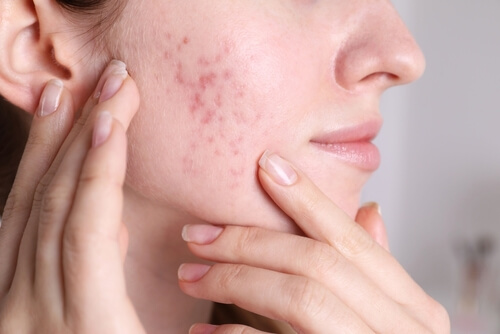
- Post-inflammatory hyperpigmentation (PIH): flat brown, tan, or dark spots left behind when inflammation triggers extra pigment. PIH is more common on medium and darker skin tones, and it tends to last longer there.
- Post-inflammatory erythema (PIE): flat pink, red, or purplish spots caused by small blood vessels that were dilated or damaged during a breakout. PIE tends to be more visible on lighter skin.
A quick way to check is to run a fingertip over the spot. If it’s smooth and level with the surrounding skin, it’s most likely a mark. If you feel a dip, a pit, or a bump, it’s a scar.
| Acne Marks | Acne Scars | |
| What it is | A color change (PIH or PIE) | A texture change |
| What it looks like | Flat red, pink, brown, or dark spots | Pits, dents, wavy skin, or raised bumps |
| Will it fade on its own? | Usually, over several months | Rarely |
| What treats it | Sunscreen, topicals, chemical peels | In-office procedures such as laser resurfacing, microneedling, and subcision |
Types of Acne Scars
Acne scars form when a breakout damages the deeper layers of the skin. The body’s repair process then makes either too little collagen or too much. Too little leaves a depression, and too much leaves a raised scar.
Depressed (Atrophic) Acne Scars
Atrophic scars are the most common type of acne scarring. They sit below the surface of the surrounding skin and fall into three groups.
Ice Pick Scars
Ice pick scars are narrow, deep pits that look as if the skin was pricked with a sharp tool. They’re usually less than 2 millimeters wide but can reach deep into the skin, so surface treatments alone often can’t reach the bottom.
Best treated with: punch excision, sometimes followed by laser resurfacing.
Boxcar Scars
Boxcar scars are round or oval depressions with sharp, well-defined edges, similar to a chickenpox scar. Shallow boxcar scars often respond well to resurfacing, while deeper ones need a more targeted approach.
Best treated with: CO2 laser resurfacing or microneedling, and punch excision for deeper scars.
Rolling Scars
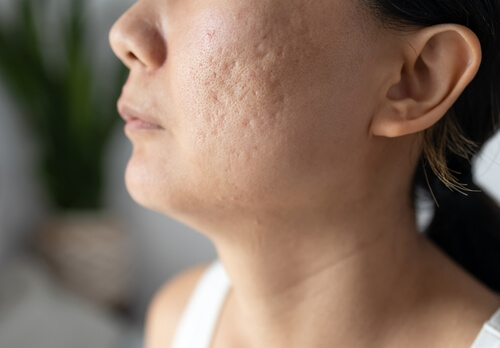
Rolling scars are broad, shallow depressions with sloping edges that give the skin a wavy, uneven look. They form when bands of scar tissue tether the skin to deeper structures and pull it downward. Best treated with: subcision, often combined with Sculptra or microneedling.
Raised Acne Scars
Raised scars form when the skin makes too much collagen as it heals. Hypertrophic scars are firm bumps that stay within the borders of the original breakout. Keloids grow beyond those borders and can itch or feel tender. They are more common on darker skin and on the chest, shoulders, and jawline.
Best treated with: steroid injections. For a closer look at your options, see our guide to hypertrophic acne scars.
Are Acne Scars Permanent?
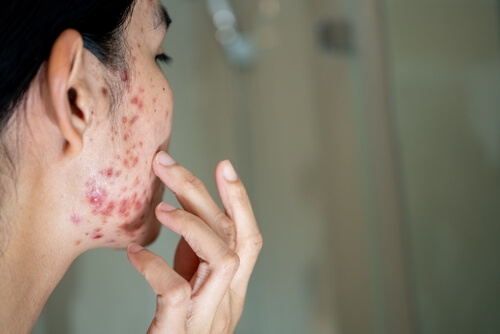
Textured acne scars are generally considered permanent, meaning they won’t disappear without treatment. Permanent doesn’t mean untreatable, though. Most patients see meaningful improvement in the depth and visibility of their scars with the right combination of procedures. Without treatment, depressed scars can actually become more noticeable with age, as the skin naturally loses collagen and firmness.
How Long Do Acne Scars Last?
It depends on whether you’re dealing with marks or scars:
| Type | Typical Timeline |
| Red or pink marks (PIE) | Usually fade over 3–6 months, sometimes longer |
| Brown or dark marks (PIH) | Usually fade over 6–12 months, and can last longer on darker skin or with sun exposure |
| Textured scars, untreated | Usually permanent |
| Textured scars, treated | Most treatments take 3–6 sessions spaced about 4–6 weeks apart. Results keep improving for several months after the final session as new collagen forms. |
Sun exposure and picking can make marks last much longer than these ranges.
Dermatologist-Recommended Treatments for Acne Scars
The best way to get rid of acne scars is to talk with a dermatologist about a treatment plan, which will, of course, depend on the type and depth of your scars, your skin tone, and how much downtime you can tolerate. Many patients get the best results from a combination.
| Scar Type | Treatments That Work Best |
| Ice pick | Punch excision, CO2 laser resurfacing |
| Boxcar (shallow) | CO2 laser resurfacing, microneedling, chemical peels, and dermabrasion |
| Boxcar (deep) | Punch excision, Sculptra |
| Rolling | Subcision, Sculptra, microneedling |
| Hypertrophic and keloid | Steroid injections |
| Red or brown marks | Chemical peels, topicals, daily sunscreen |
Laser Resurfacing
Our SmartSkin CO2 laser removes thin columns of damaged skin and heats the layers beneath. This triggers new collagen and smoother skin as it heals. It’s one of the most effective options for boxcar scars and overall uneven texture, and it can also soften rolling scars. Expect about a week of redness, swelling, and peeling, with pinkness that can linger for a few weeks.
Microneedling
Microneedling uses a device with fine, sterile needles to create thousands of tiny channels in the skin. As the skin repairs those channels, it produces new collagen that gradually fills in shallow depressed scars. It works well for rolling and shallow boxcar scars. It’s also a good fit for many skin tones because it carries a lower risk of pigment changes than some lasers. Most patients need three to six sessions, with a day or two of redness after each.
Chemical Peels
A chemical peel applies an acid solution that removes the outer layers of skin so fresher skin can grow in its place. Light and medium peels are especially useful for fading post-acne marks and evening out skin tone. Medium-depth peels can also soften very shallow scarring. Downtime ranges from a few days of flaking to about a week of peeling, depending on the peel’s strength. Your dermatologist will choose the peel type and depth based on your skin tone.
Dermabrasion
Dermabrasion uses a specialized rotating instrument to remove the top layers of skin. This softens the sharp edges of scars so they blend with the surrounding skin. It’s most useful for boxcar scars and rough, uneven texture. Because it works deeper than a peel, healing usually takes 7 to 10 days, and new skin may stay pink for several weeks. It’s generally better suited to lighter skin tones.
Subcision
Subcision is a minor in-office procedure for rolling scars. After numbing the area, your dermatologist inserts a small needle under the scar to release the fibrous bands pulling the skin down. Once those bands are released, the skin can lift back toward the surface. Bruising and swelling for a week or two are common. Subcision is often paired with microneedling, laser resurfacing, or Sculptra for a smoother result. It’s one of the procedures in our scar revision services.
Punch Excision
Punch excision is the go-to option for ice pick scars and deep boxcar scars that other treatments can’t reach. Your dermatologist uses a small, round tool to remove the scar, then closes the skin with one or two tiny stitches. What’s left is a fine, flat line that’s usually far less noticeable than the original pit. Stitches typically come out in about a week. The area can be resurfaced later to help it blend further. Punch excision is also part of our scar revision services.
Fillers
Fillers lift depressed scars from underneath. Sculptra, made from poly-L-lactic acid, is a collagen stimulator. Rather than filling the scar all at once, it prompts your skin to build its own collagen over the following months. Results appear gradually and can last up to two years. It’s a good option for rolling scars and broad, shallow depressions. Most patients need a short series of sessions spaced several weeks apart.
Steroid Injections
For hypertrophic scars and keloids, your dermatologist injects a corticosteroid directly into the scar. This reduces inflammation and breaks down excess collagen. Over a series of injections, usually spaced four to six weeks apart, the scar softens, flattens, and itches less. Possible side effects include skin thinning, small visible blood vessels, and lighter patches of skin, which can be more noticeable on darker skin tones. Your dermatologist will adjust the dose to reduce these risks.
Combining Treatments
Most people have more than one type of acne scar. That’s why the best results usually come from two or more treatments staged over several months. A common approach is to start with subcision or punch excision for individual scars, then follow with resurfacing to smooth the overall texture.
Acne Scar Treatment for Skin of Color
Medium and darker skin tones are more prone to PIH after certain procedures, especially aggressive laser resurfacing and dermabrasion. That doesn’t rule out treatment. Your dermatologist may adjust laser settings or prepare your skin with pigment-safe topicals beforehand. They may also rely more on options like microneedling and subcision, which carry less risk of discoloration.
At-Home Treatments
The right skincare can make a real difference for acne marks. No cream or serum can fill in a pitted scar, though.
What helps (mainly for marks):
- Retinoids speed up skin cell turnover so marks fade faster. Adapalene is available over the counter, while stronger options like tretinoin require a prescription. Apply them at night.
- AHAs such as glycolic and lactic acid exfoliate the surface to fade discoloration and smooth mild roughness.
- Vitamin C is an antioxidant that brightens the skin and helps fade dark spots over time. It works best in the morning under sunscreen.
- Daily sunscreen matters most. Florida’s UV exposure is strong year-round, and sun darkens both PIH and PIE, which can undo months of progress. Wear a broad-spectrum SPF 30 or higher every day, and reapply when you’re outdoors.
Introduce new products one at a time. Irritated skin can develop new marks.
What doesn’t help:
- Expecting topicals to fix texture. Pitted and raised scars need in-office treatment.
- At-home dermarollers. They can’t safely reach the depth needed to remodel scars, and they raise the risk of irritation and infection.
- DIY remedies like lemon juice or baking soda. These can irritate the skin and make dark marks worse.
- Harsh scrubs. Rough exfoliation inflames the skin without improving scars.
How to Prevent New Acne Scars
The best way to deal with acne scars is to keep new ones from forming.
- Treat active acne early: The longer inflammatory acne goes on, the higher the risk of scarring. If over-the-counter products like benzoyl peroxide aren’t controlling your breakouts, our dermatologists can help you treat active acne with prescription options.
- Don’t pick or pop: Squeezing pushes inflammation deeper into the skin. Read more about how to prevent acne scars after popping.
- Protect your skin from the sun: This is so new marks don’t darken and linger.
When to See a Dermatologist
It’s time to see a dermatologist if:
- Your scars have texture, such as pits, dents, or raised areas
- Marks haven’t faded after six months or more
- You still have active acne that keeps leaving marks or scars
- A scar is raised, growing, itchy, or painful
A dermatologist can confirm what type of scarring you have and build a treatment plan around your skin, your schedule, and your goals.
Frequently Asked Questions
Do acne scars go away?
Acne marks usually do. Red and brown spots left by breakouts often fade over several months, especially with daily sunscreen. Textured scars, such as pits and raised bumps, rarely go away on their own. In-office treatments like laser resurfacing, microneedling, and subcision can make them much less noticeable.
Can you get rid of acne scars completely?
In most cases, not 100%. Textured acne scars rarely disappear entirely, but the right combination of treatments can make them much shallower, smoother, and harder to see. Acne marks are different. With time, sun protection, and good skincare, they usually fade completely.
Can old acne scars still be treated?
Yes, scars from years or even decades ago can still improve. A 20-year-old scar might not disspaer entirely, but treatments like subcision, CO2 laser resurfacing, microneedling, and punch excision all work on older scars, and can help reduce their appearance.
Does popping pimples cause scarring?
Yes, popping pimples can cause scarring. Squeezing a pimple can push bacteria and inflammation deeper into the skin and damage the surrounding tissue. That raises the chance of dark marks and permanent scars. Deep, inflamed breakouts like cysts carry the highest risk. If a pimple needs attention, a dermatologist can treat it safely.
Can vitamin C remove acne scars?
Vitamin C can help fade the dark marks acne leaves behind, but it can’t remove textured scars. As an antioxidant, it brightens the skin and evens out tone over time, especially when paired with daily sunscreen. Pitted or raised scars need in-office treatments like laser resurfacing, microneedling, or subcision.
Find the Right Acne Scar Treatment at Suncoast
Book an acne scar consultation at one of Suncoast Skin Solutions’ 40+ Florida locations.